
‘Almost-words’ in Rain and Other Stories: A book review

Photo by Ben White on Unsplash.com.
Originally published in The Curious Cat Project on Nov. 1, 2019.
Mia Couto’s Rain and Other Stories is aptly titled: the many short stories in this creative collection (including the title story) involve water as a theme or subject.
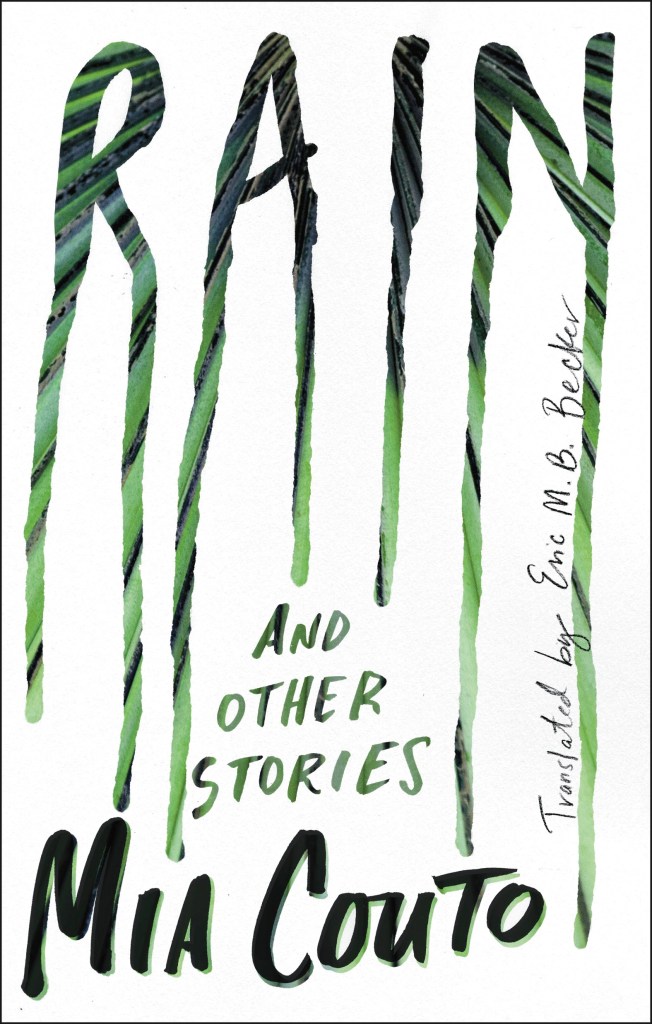
The Mozambican writer’s invigorating, refreshing words also rain down on the reader. Besides the inventive fictions he creates and their exotic locales, that kind of creativity — even in a translated work — adds to the reader’s joy.
I had never heard of Couto, despite his considerable literary success, until I ran across a short review of Rain in the New York Times Book Review. I was intrigued by the story plots from that troubled African country and the excerpts of some of his writing, but also by what Geovani Martins calls his “almost-words” of “illusory and playful sentences.”
Martins cites, as examples: “water of benedreamtion,” “lazurely” and “intirrigated.”
Some of Couto’s stories also include lines that read like proverbs and stay with you long after you turn the page.
In “Blind Estrelinho” he writes, “For a blind man, the sky is everywhere.” In “The Perfume” there is, “Tears, after all, are water, and only water can wash away our sorrows.” In “Felizbento’s Pipe” he writes, “Every tale loves to masquerade as truth.” And in “Beyond the River Bend,” we learn that, “Fear is a river one must cross wet.”
Or consider the power and wisdom of this image from the title story: “Windows: are they not the place where houses dream of being the outside world?”
But it is the “almost-words” that the reader stumbles upon, like gems you may find on a beach of this south African nation, that remain with you. Rain was first published in 1994 and the newly translated version by Eric M.B. Becker was released this year by Biblioasis, which publishes world-class fiction from my hometown of Windsor, Ontario, Canada.
Here is a list of those almost-words. They are by no means exhaustive, but enough to whet the appetite. For readers who like to bathe in the creative currents of words coined by the likes of such inventive wordsmiths as Shakespeare, Lewis Carroll and Dr. Suess, they will wash over your literary palate.
Sip them in slowly, drink them thirstily or swallow them whole — however you choose, you will find these treats satisfying.
- “musclyboned” (“The Waters of Time”)
- “enfluted” (“The Waters of Time”)
- “unvisioned” (“Blind Extrelinho”)
- “fargotten” (“Blind Extrelinho”)
- “befancied” (“Blind Extrelinho”)
- “timidiminutive” (“The Delivery”)
- “murmurmusers” (“Rain”)
- “inexistence” (“The Flag in the Sunset”)
- “permeavisible” (“The Flag in the Sunset”)
- “splendorous” (“Ninety-Three”)
- “rogueries” (“Ninety-Three”)
- “distrusted” (“Lamentations of a Coconut Tree”)
- “inoccurrences” (“Lamentations of a Coconut Tree”)
- “believerist” (“Lamentations of a Coconut Tree”)
- “irrepeatably” (“Serpent’s Embrace”)
- “ticky-tacked” (“High-Heel Shoes”)
- “dizzoriented” (“The Hapless Calculus of Happiness”)
- “shame-nix” (“The Hapless Calculus of Happiness”)
- “swerveering” (“Joãotónio, For Now”)
- “crystalluminous” (“Joãotónio, For Now”)
- “frigelid” (“Joãotónio, For Now”)
- “penultimatum” (“Joãotónio, For Now”)
- “meanderly” (“Joãotónio, For Now”)
- “ninnery” (“War of the Clowns”)
- “deadspread” (“War of the Clowns”)
- “downjected” (“The Woman Engulfed in Stone”)
- “airsfixited” (“Drinking the Time By”)
- “dis-purpose”(“Drinking the Time By”)
- “tim-tim-ba-tinning” (“The Deaf Father”)
- “back to the the futurist” (“Oracle of Death”). I suspect that second “the” is not a copyeditor’s mistake and you gotta love how Couto plays on the phrasing of the cliche.
- “belchful” (“Square of the Gods”)


 Claudio D'Andrea
Leave a comment