
Book review of Omar El Akkad’s One Day, Everyone Will Have Always Been Against This
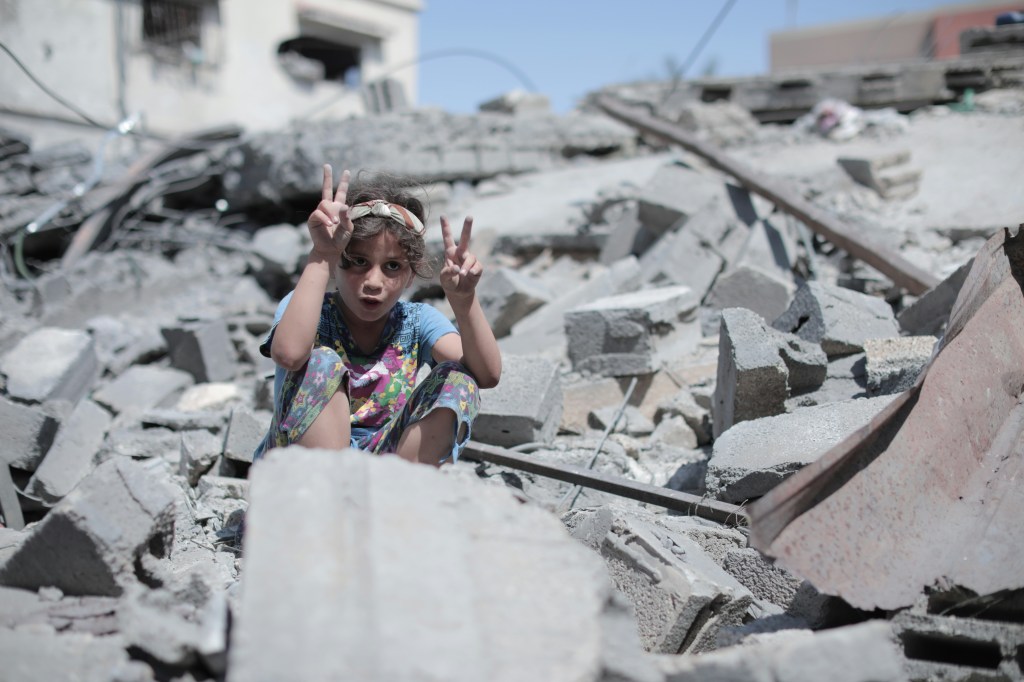
Photo by Mohammed Ibrahim on Unsplash
Originally published in Medium on Jan. 28, 2026.
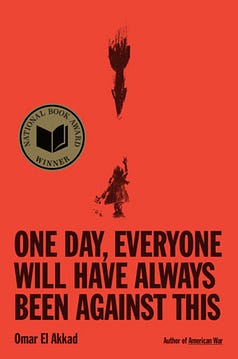
Omar El Akkad’s One Day, Everyone Will Have Always Been Against This is a hard read.
Not so much hard to understand, but its subject is hard. Hard as in hard reality. Hard truths.
It’s an unsettling and brutally blunt account of the horrors of the attacks on Gaza, mostly, but also of other terrors his adopted country of America is witnessing (and ignoring) like climate change, injustices against Blacks and Indigenous people.
Before reading the book, I had mixed feelings about coverage of the carnage taking place in Gaza. I know it has been horrible and maybe even genocidal. (No, I never believed that those who level that charge against Benjamin Netanyahu’s government are anti-semitic; they are siding with the oppressed, innocent victims of a brutal and ongoing campaign of violence.)
But I also understand how vulnerable and angry the Israeli people must have felt after Hamas’s brazen attacks on their country on Oct. 7, 2023. An estimated 1,219 people were killed on a day that has been described as Israel’s 9/11. Hamas, after all, wants to see the destruction of Israel and in that they find common cause with the likes of other terrorist groups and Iran.
Still, I can’t take my eyes away from the horrifying images of Gaza in the news. And One Day, Everyone Will Have Always Been Against This forces you to look at them.
El Akkad was born in Egypt, grew up in Doha, Qatar and lives in the U.S. and so some may think this is not a Canadian book. But he did live in Montreal as a teenager, attended Queen’s University in Kingston and his 2021 book What Strange Paradise was a Giller Prize winner so that still makes him a Canadian in my book. (Why he moved to the U.S. though and still lives there as Trump continues his fascist transformation of the country is most perplexing.)
El Akkad’s writing is beautiful, even considering the dark subject matter, and there are passages that are pure poetry.
For instance, he describes “hastily dug graves vast against the horizon, like goose bumps on the flesh of the earth.”
And the way he presents his philosophy is also done with sublime, poetic precision such as the book’s title which came from a tweet of El Akkad’s that went viral after the bombardment of Gaza: “One day, when it’s safe, when there’s no personal downside to calling a thing what it is, when it’s too late to hold anyone accountable, everyone will have always been against this.”
He takes aim especially at the “liberal circles” in America, such as under the Biden administration, that allowed the bombing to continue and calls it a rot eating away at his country. For instance, he writes:
“The machine swallows life and spits out convenience. If liberalism has finally decided it is safe enough to consider the Black people whose labor built the machine as human, and the Indigenous people whose obliteration made room for the machine as human, and maybe the distant foreigners who sew our clothes and solder our motherboards might be human, and the inconvenient occupied whose land and water might hold resources we implicitly know but cannot explicitly say would be so much better used in service of the civilized world might be human, and if even the natural world and its inhabitants deserve the rights of humans — well, what’s left to feed the machine? What’s left to manufacture convenience?”
El Akkad forecasts a future that will be either promising or bleak. One day, he writes, all this will end “in peace, or in eradication at a scale so overwhelming it resets history.”
He thinks it’s inevitable. Perhaps not the end of history, as Francis Fukuyama once wrote, but the end of all this wanton destruction and our indifference to it:
“One day there will be no more looking away. Looking away from climate disaster, from the last rabid takings of extractive capitalism, from the killing of the newly stateless. One day it will become impossible to accept the assurances of the same moderates who say with great conviction: Yes the air has turned sour and yes the storms have grown beyond categorization and yes the fires and the floods have made of life a wild careen from one disaster to the next and yes millions die from the heat alone and entire species are swept into extinction daily and the colonized are driven from their land and the refugees die in droves on the borders of the unsated side of the planet and yes supply chains are beginning to come apart, and yes soon enough it’ll come to our doorstep, even our doorstep in this last coddled bastion of the very civilized world, when one day we turn on the tap and nothing comes out and we visit the grocery store and the shelves are empty and we must finally face the reality of it as billions before us have been made to face the reality of it but until then, until that very last moment, it’s important to understand that this really is the best way of doing things. One day it will be considered unacceptable, in the polite liberal circles of the West, not to acknowledge all the innocent people killed in that long-ago unpleasantness. The truth and reconciliation committees are coming. The land acknowledgements are coming. The very sorry descendants are coming. After all, grief in arrears is grief just the same.”
In his despair at the moderates who look away from injustice, El Akkad is certainly not alone. Martin Luther King was “gravely disappointed” in the white moderates who seemed “more devoted to order than to justice” and preferred a “negative peace which is the absence of tension to a positive peace which is the presence of justice.”
The legendary civil rights leader who declared “if not now, when?” in the struggle of the Blacks for justice said:
“Shallow understanding from people of good will is more frustrating than absolute misunderstanding from people of ill will. Lukewarm acceptance is much more bewildering than outright rejection.”
In his book, El Akkad chronicles the brutality of some of the attacks on Gaza. For instance, a woman who had her leg amputated without anesthesia, a girl whose jaw had been torn off, and a child in diapers pulled from tents after a firebombing, his head severed. It’s also a very personal book as he relates anecdotes and stories about his family.
Early in the book he recalls a fender-bender accident he witnessed in Doha in the late 1990s. A southeast Asian man who caused the accident was berated by the driver of a Mercedes, a local and well-to-do man who removed a sandal and started beating the other driver with it. Onlookers watched and laughed.
“I’ve never stopped thinking about it, about the rage in one man’s eyes and the fear in the other’s,” El Akkad writes.
He realized the Southeast Asian man’s problem was his own “non-existence” and concludes: “It’s come to shape the way I think about every country, every community: Whose nonexistence is necessary to the self-conception of this place, and how uncontrollable is the rage whenever that nonexistence is violated?”
There is a hint of hope in El Akkad’s conclusion. He thinks courage is a “potent contagion” — that even during the worst of things, “there is more invested in solidarity than annihilation. That just as it has always been possible to look away, it is always possible to stop looking away. None of this evil was ever necessary. Some carriages are gilded and others lacquered in blood, but the same engine pulls us all. We dismantle it now, build another entirely, or we hurtle toward the cliff, safe in the certainty that, when the time comes, we’ll learn to lay tracks on air.”
And if not now, when?
Claudio D’Andrea has been writing and editing for newspapers, magazines and online publications for about 40 years and has published a book of short fiction, Stories in the Key of Song. Visit him at claudiodandrea.caor read his stuff on LinkedInand Medium.comand follow him on Bluesky.


 Claudio D'Andrea
Leave a comment