
A Present-Day Real Life Look-Back at the Dystopian Future of Sinclair Lewis’s It Can’t Happen Here, and the promise of Canada
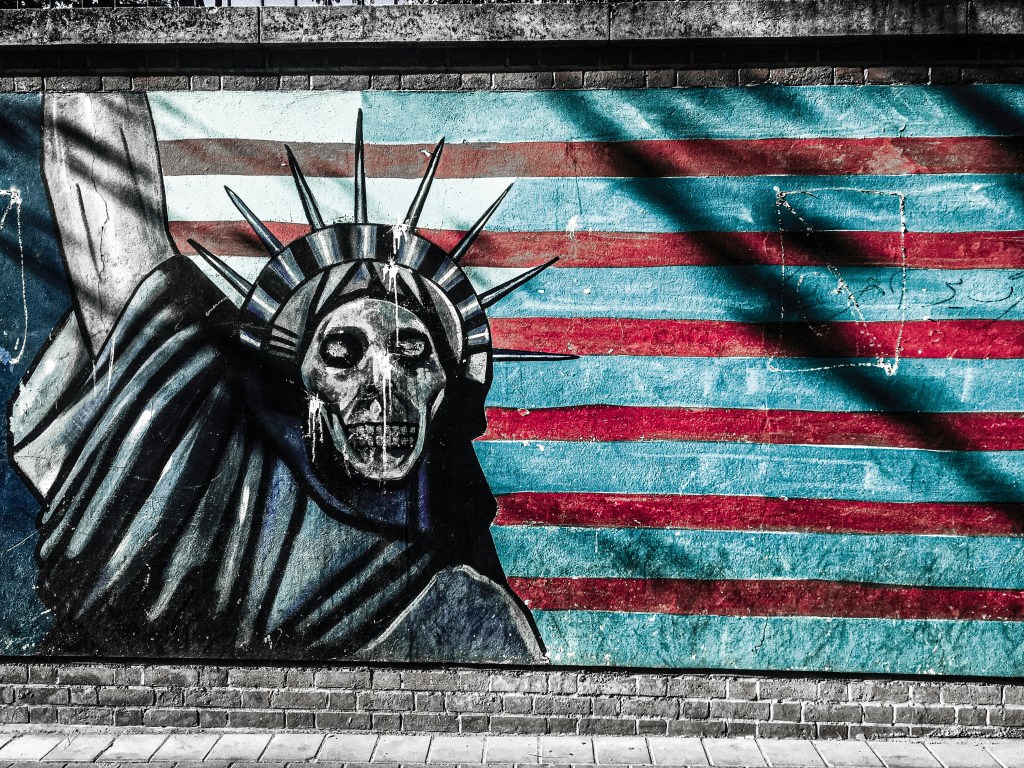
Photo by Muhammed Nuri Çiçenoğlu on Unsplash
Originally published in Medium.
Rewind. Play. Fast forward. Play. Repeat.
Welcome to America, land of fear and home of the brutes. It’s 1935. No, it’s 2025. Same difference.
Meanwhile in Canada, it’s peace, order and good government — for the most part. As always.
Sinclair Lewis couldn’t have imagined his America under the boot of President Donald Trump. Or maybe he did and wrote a book about it 90 years ago, about what his country could soon look like at a time when people in certain parts of the world were falling for dictators on both the right and left.
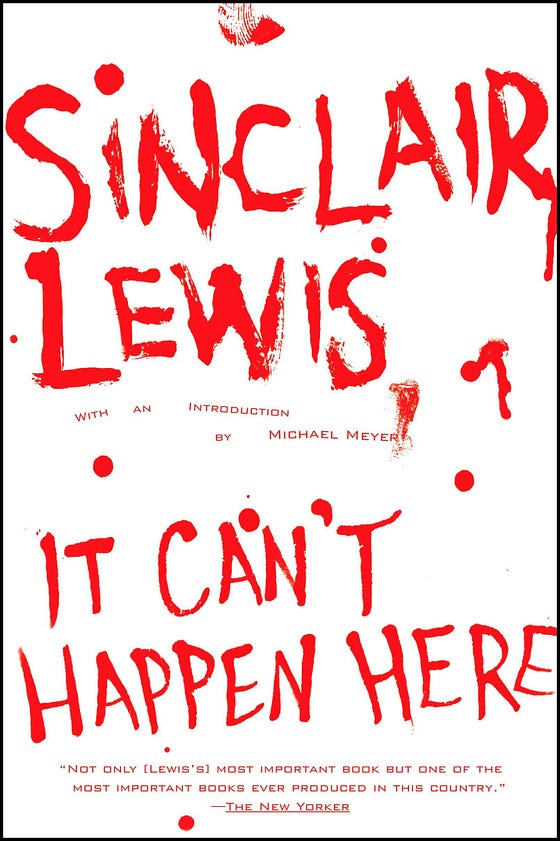
It Can’t Happen Here is the ironic title he chose for his dystopian tale in which a politician gets elected president of the United States and turns the country into a fascist state, complete with concentration camps and roaming death squads. The popularity of the award-winning author has waned over the years but after Trump’s first election Lewis’s novel is back on the shelves and interest in it grows with Trump’s increasingly authoritarian second regime.
It’s tempting to see all the parallels between Lewis’s fictional America and today. Reading It Can’t Happen Here in 2025 makes you wonder whether Trump read the book (or, more likely, had someone read a summary to him) and used it as a playbook for his presidency.
There are so many similarities between the fictional and realistic fascist Americas (with the possible exception that Lewis’s president Berzelius ‘Buzz’ Windrip rises to power as a Democrat instead as a Republican) that you think the author was looking into a crystal ball. Maybe he just realized that all fascists follow the same path to power. His protagonist-hero Doremus Jessup, in fact, calls it the “biology of dictatorships.”
As Lewis writes: “All dictators followed the same routine of torture, as if they had all read the same manual of sadistic etiquette. And now, in the humorous, friendly, happy-go-lucky land of Mark Twain, Doremus saw the homicidal maniacs having just as good a time as they had had in central Europe.”
Consider these Windrip/Trump parallels:
Wounded war vets: Both leaders detested wounded soldiers as a sign of weakness. In the novel, Lewis calls it “bad Fascist psychology. All those poor devils he’ll hide away in institutions, and just bring out the lively young human slaughter cattle in uniforms.” Among many other disparagements of injured and captured soldiers, Trump once said Senator John McCain, a military veteran and prisoner of war in Vietnam, was not a war hero. “I like people who weren’t captured,” he said.
Trade: Both leaders are in favour of inshoring manufacturing and production of goods to America to an almost fanatical degree. Windrip, Lewis writes, “was in favor of the United States so arming itself, so preparing to produce its own coffee, sugar, perfumes, tweeds, and nickel instead of importing them, that it could defy the World … and maybe, if that World was so impertinent as to defy America in turn, Buzz hinted, he might have to take it over and run it properly.”
Trade II: Windrip’s balance of trade, of course, means tipping the scales firmly in America’s favour. He wants people to visit the Grand Canyon, Yellowstone and other American places “thus leaving their money here” so he can fulfill his election promise of paying $3,000 to $5,000 to every family. In Trump’s case, it’s to give out tax breaks, especially to the rich.
Duh!: Windrip was an illiterate, although perhaps not quite to the same buffoonery extent as Trump. As a senator before his election, he is described as “vulgar, almost illiterate, a public liar easily detected, and in his ‘ideas’ almost idiotic, while his celebrated piety was that of a traveling salesman for church furniture, and his yet more celebrated humor the sly cynicism of a country store.”
Home Sweet Home: Windrip, in his memoir Zero Hour, dreams of retiring and building an “up-to-date bungalow in some lovely resort” in a place like Florida. Trump didn’t wait until his retirement to build Mar-a-Lago and it’s hardly a “bungalow” but Lewis got the state right.
Women: Windrip, like Trump, tramples on women’s rights. Jessup’s mistress Lorinda Pike warns early in the novel: “Well, my darling, it’s going to be pretty bad. I guess Windrip & Co. will put the woman’s struggle right back to the sixteen-hundreds, with Anne Hutchinson and the Antinomians.” (She was a Puritan whose beliefs ran afoul of authorities in Massachusetts.)
Women II: In an election rally near Green Bay, Wisconsin on Oct. 30, 2024, Trump said “I want to protect the people. I want to protect the women of our country. I want to protect the women,” He repeated he would protect them, “whether the women like it or not.” In It Can’t Happen Here, President Windrip gives an address that is compared to “a fireman rescuing a pretty girl from a ‘conflagration,’ and carrying her down a ladder, for her own sake, whether she liked it or not, and no matter how appealingly she might kick her pretty ankles.”
Muskish: Lee Sarason, Windrip’s secretary of state, isn’t an outsider to government like Elon Musk was to Donald Trump’s administration. But he carries an Iago-like outsider’s sinister influence like what the billionaire private owner did at the Department of Government Efficiency (DOGE). And just as most people predicted the inevitable break between the competing powerful egos of Trump and Musk, in the book Sarason usurps the presidency. Lewis says his “clique was not a government within a government; it was the government itself, minus the megaphones.” And like Musk, whose DOGE was run by young tech-heads hell-bent on creating chaos, Sarason as president is amused into shocking people “by making a pink-cheeked, moist-eyed boy of twenty-five Commissioner” and giving other young people powerful positions in his administration.
Yes Men: If there is one thing bigger than Trump, it’s Trump’s ego. It is fed by sycophants of unquestioning loyalty. Similarly, Windrip laments, “And daily he wanted louder, more convincing Yeses from everybody about him. How could he carry on his heart-breaking labor if nobody ever encouraged him? he demanded.”
Blame Canada: Trump has called Canada the 51st state and seems frustrated that it can’t happen fast enough. Windrip, Lewis writes, after 18 months as president “was angry that Mexico and Canada and South America (obviously his own property, by manifest destiny) should curtly answer his curt diplomatic notes and show no helpfulness about becoming part of his inevitable empire.”
Greenland too! This one was just too weirdly prescient: “Sarason was eager for war with Mexico (or Ethiopia or Siam or Greenland or any other country,” Lewis writes.
Great White North to the rescue!
It can be a self-fulfilling prophecy of hindsight, seen with proverbial 20/20 vision, to read too much of Trump’s 2025 America into Lewis’s America of the early 1930s. Many of these parallels may just be the “biology of dictatorships” or just plain coincidence.
What this novel and at least one other dystopian vision of future America do share in common, though, is a Canada as a common-sense neighbour who helps restore some semblance of sanity to her neighbours. The other novel is The Handmaid’s Tale although in that case the author, being Canadian, may be accused of bias.

In her dark nightmare of Gilead, Atwood’s heroine Offred describes Canada as a place “out there, where normal life continues.”
Canada has steadfastly remained a true land of the free and home of the brave, despite its warts over the years. We proved as much in many ways including: the Underground Railroad for enslaved people escaping the U.S.; in our outsized battle efforts over the years (including our entry into both world wars, while America sat on the sidelines for years); in the humanitarian efforts of the citizens of Gander, Nfld. welcoming stranded American travellers when their airspace was shutdown after 9/11 (which inspired the musical Come From Away); and in resisting America’s foolhardy and disastrous war in Iraq and its weapons of mass destruction that did not exist.
Similarly, Lewis sees Canada as a kind of moral compass in It Can’t Happen Here. Jessup attempts to escape the fascist authorities to Canada following reports of mass executions and the death of his son-in-law Dr. Fowler Greenhill. Montreal is the headquarters of the New Underground movement that seeks to bring down the fascist U.S. government.
What is it about Canada that sets up our politics and society as a model for the Americans? Lewis didn’t appear to say much about Canada outside of his novels, but we do know that he was familiar with our country. His brother Claude, a physician, visited Canada in 1924 and Lewis set his 1926 novel Mantrap in Saskatchewan.
Always a sharp critic of his America, the man H.L. Mencken called the “red-haired tornado from the Minnesota wilds” lamented in his 1930 Nobel Prize-winning lecture that “America, with all her wealth and power, has not yet produced a civilization good enough to satisfy the deepest wants of human creatures.”
He called his country “the most contradictory, the most depressing, the most stirring, of any land in the world today.”
Is it any wonder that in such a land, a “ringmaster-revolutionist” like Senator Windrip or a real estate mogul and reality-TV-caricature-of-a-man like Trump can become president? That even those who live in the belly of the beast, like Doremus Jessup, can’t believe that the “comic tyranny” swirling around him will endure.
“It can’t happen here,” Doremus thinks, even after it’s too late.
It can happen there, in the United States, and it has happened.
Fortunately, Canada is another country in 2025, as it was in 1935.
Claudio D’Andrea has been writing and editing for newspapers, magazines and online publications for about 40 years and has published a book of short fiction, Stories in the Key of Song. Visit him at claudiodandrea.ca or read his stuff on LinkedIn and Medium.com and follow him on Bluesky.


 Claudio D'Andrea
Leave a comment