
Originally published in Illumination on Medium on May 27, 2026.
Storytelling is creative alchemy. It is the metamorphosis of an idea into words into characters and into story. For an author, watching the worlds he creates emerge on the printed page of a book gives a tingle, a visceral thrill.
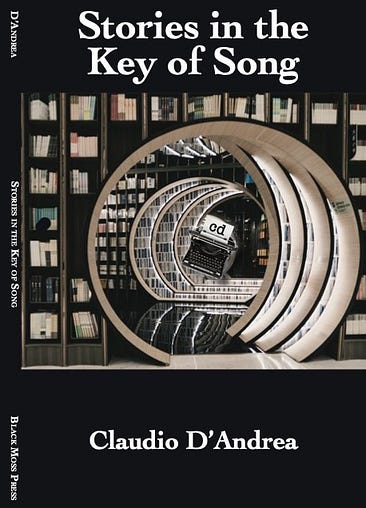
When I wrote my debut collection Stories in the Key of Song, I could not believe I could count myself among the many fine authors who have been published by Black Moss Press. I was reminded of a humorous inspirational slogan that my favourite band Rush once used: “Individually, we are a ass; but together, we are a genius.”
I thought at the time that writing a book was a lot like that. “There are a lot of hands and great minds that go into producing a book, even though it has one name on the cover,” I wrote. “The coming-together of all those hands and brains is proof of the second half of that statement, at least.”
As I get ready to work in earnest on transforming one of my stories, “Bus Stop, Bus Goes,” into a short film, I think that concept moves to an entirely different level.
Because writing a story is a solitary act — at least the creation of your art. But moulding that story into a film seems to me the very essence of genius, where creative minds come together to make your art.
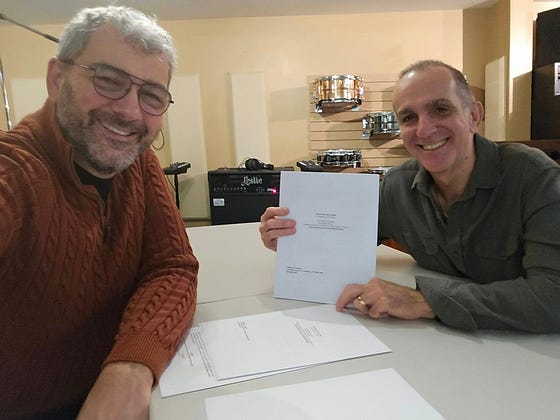
For the past couple of years, I wrote a film adaptation of my story and have been working with Walter Riggi on shaping the script and coming up with film ideas. I’ve known Walter for years and was familiar with his talent in video and audio productions. He knew about my written work and approached me years ago to ask if I had something he could film. I had never written for film before so I had to think about it.
I went back to “Bus Stop, Bus Goes,” a story that’s near to my heart as the first piece of short fiction I wrote after years away from the craft, and thought it could work. It’s essentially all dialogue and tells the story of two strangers who meet on a Windsor Transit bus on a cold morning on New Year’s Day.
I got to work and started writing a draft. My script was very amateurish — I had no idea about the technical elements in that kind of writing, let alone the visual imagination that goes into creating a story for film — but with Walter’s help I shaped it into a more complete version.
I also studied other film scripts and am especially indebted to the great work of Cole Haddon. He wrote the novel Psalms for the End of the World and is a screenwriter. His substack newsletter 5AM StoryTalk is a treasure trove of interviews, engaging ‘Weekly Questions’ and especially scripts that you can download and study. I read many of those scripts, from TV sitcoms to classic films, and learned more about the craft.
But learning how to write scripts and even working with a seasoned pro like Walter takes you only so far. Your art tent needs to have a lot more people standing under it.
Amanda Gellman, the president of the Windsor Centre for Film Digital Media & the Creative Arts, said in an April 16, 2026 interview that success in making a film is all about making connections.
“Film is a team sport,” she told Blue Screen Actor host Heidi Richards. “You need to be part of a team. Find a team that you fit in and grow your talent.”
Money is a big part of that team sport. Creating a film isn’t cheap but my team is helping me find a way to find the funds.
Amanda provided me with some clear-eyed direction on behalf of her non-profit film centre. And I am forever indebted to Christian Vegh, a talented young singer, songwriter, guitarist and producer. He has agreed to appear in a cameo role in Bus Stop, Bus Goes and generously offered to score the film, write an original song and help in its promotion and fundraising with a musical performance.
My team includes other talented people — producers, actors — and sponsors and my project got a big boost in support with an Emerging Artist in Film Arts Grant from the Windsor Endowment for the Arts. It provides the seed money to make my film possible. Then there are friends and family who provide support and encouragement and help breathe life into my soul and art.
And so, for this solitary writer, it is all coming to a moment that I will cherish: Getting ready to see one of my stories and the people I created come to life.
It’s a little like love, the titillating thrill and emotional energy of a union with another person. A friend of mine, Gerald Decoste, said it must feel like giving birth to a child.
Other, famous writers have expressed similar joy in seeing their characters and stories appear in film. Stephen King was so moved by the adaptation of his story The Body in the movie Stand By Me, that he uncharacteristically gave director Rob Reiner a hug after a screening. “I marvelled at what a good story the truth could make in the right hands,” he said in a Rolling Stone magazine tribute to the late director.
Perhaps the sci-fi and fantasy author Brittany Amara said it best when she wrote about the adaptation to film of her story A Perfect Copy in a 2024 essay in Medium.
Film gives a “very different kind of experience” for the writer, she said:
“Books open portals in our minds, but films provide a visible gateway. They are windows, four-cornered veils of light and sound that seem to divide the dimensions.”
Like Gellman, she said film is all about teamwork. “Films demand that an author surrender to a process built on collaboration, compromise, and complete creative vulnerability after years of working in solitude,” she wrote.
Like me, she conveys that special connection a writer feels for her characters. I find that even my characters that I probably wouldn’t like or want to meet in person are human and there’s a kind of love I have for them. I want them to be treated well, just like Amara who gets the last word:
“I’ve read the horror stories about authors who’ve seen their work mangled and mutated in the transition from novel-to-screen. It struck fear into my heart. I love my stories in a way so few understand. The characters I create feel like family, and the worlds I build feel like home. The thought of having these people and places become unrecognizable is heart wrenching. Yet, the thought of seeing them emerge from the pages of my manuscripts and screenplays is exhilarating beyond words.”
Claudio D’Andrea has been writing and editing for newspapers, magazines and online publications for about 40 years and has published a book of short fiction, Stories in the Key of Song. Visit him at claudiodandrea.ca or read his stuff on LinkedIn and Medium.com and follow him on Bluesky.


 Claudio D'Andrea
Leave a comment