
Originally published in Illumination on Medium on June 24, 2026
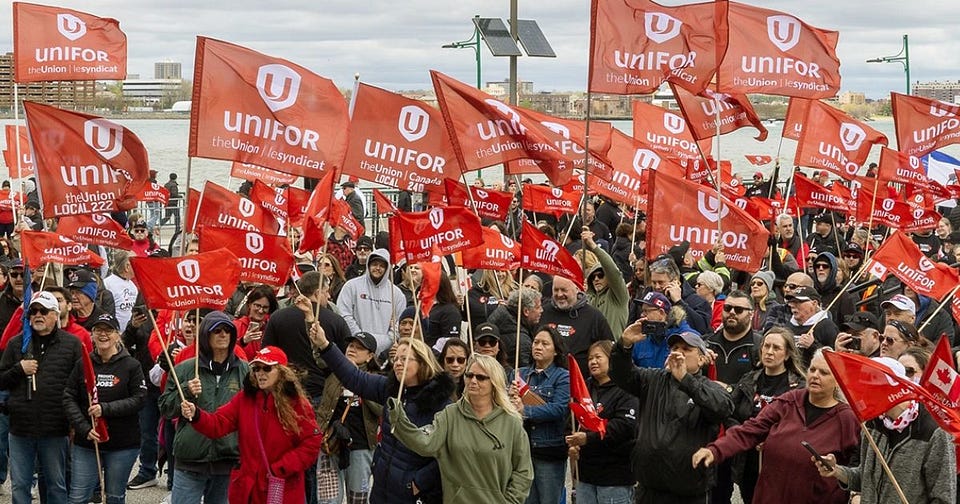
Many moons ago, after years of representing members at my workplace on behalf of our union, I asked a co-worker these questions:
“Does any of this stuff we’re doing matter? Is it making a difference to you or anyone else?”
My co-worker was a sales representative at the Windsor Star where I still work, although remotely these days and with a drastically diminished workforce. (More on that later).
I was asking about our efforts as union representatives on behalf of her and her sisters and brothers at the paper. I was asking about my years as a health and safety representative (after many workplace audits, meetings with company officials and responses to complaints) and as a union rep in bargaining and handling grievances and other matters.
I guess I wanted to know, did any of it matter?
The sales rep didn’t hesitate. Eyes opening, she reassured me that “of course” I was making a difference. The union was making a difference.
It made me feel a bit better during my Saving Private Ryan moment of self-doubt. You may recall that 1998 movie ended with the elderly Private Ryan looking down on the grave of fallen brother in arms Captain Miller and then asking his wife: “Tell me I have led a good life.” And then, “Tell me I’m a good man.”
Years later and as I approach retirement, I still appreciate that reassurance even on the eve of receiving an award for my union activism. Perhaps it’s inevitable, maybe even healthy, to not bask in my own glory.
On June 19, 2026, I received the Clifton Grant Health and Safety award from the Windsor & District Labour Council (WDLC). The ceremony took place during the WDLC’s Gary L. Parent Labour Activist Awards banquet, which is named after the late, legendary labour leader under whose shadow all of my doubts newly emerged.
Because when it comes down to it, anyone who engages in union activism — I won’t call it work since most unionists are volunteers — are not in it for the glory. Or for selfish perks.
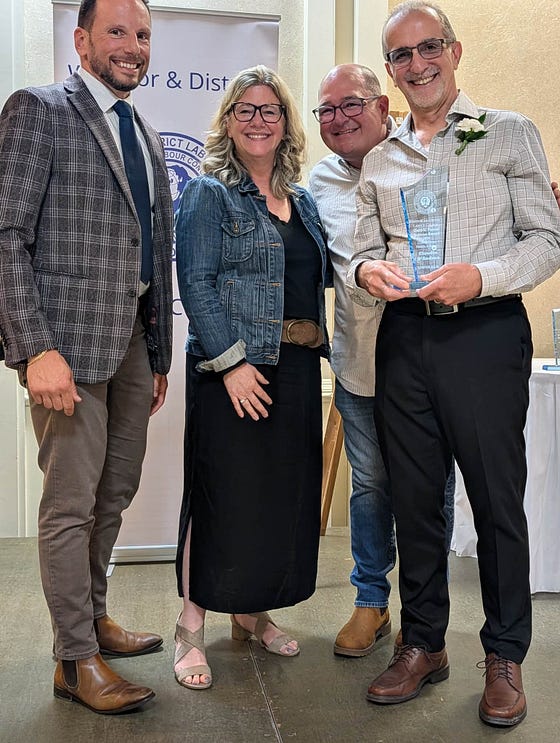
Indeed, the WDLC itself points to the importance of shining the spotlight on labour activists. “Their efforts are far too often unrecognized, as they frequently work anonymously behind the scenes,” they noted.
Which is at it should be. I suspect most labour activists may feel a little sheepish when an honour like this is bestowed. I know I’m feeling like that.
A labour of love
Union work is a labour of love and of just doing damn good and doing the right thing. In a world as fractured and unequal as ours, that feels good. More than that, it just feels necessary. It is necessary.
My union activism wasn’t bred in the bone. In fact, there have been moments that rattled me a bit.
In the 1970s, I recall going with a buddy to a Kmart store in Windsor to look for something. Probably basketball shoes. Unionized workers were striking the department store at the time and I remember walking through the picket line with my friend, oblivious of what we did.
A neighbour’s uncle who was carrying a picket sign recognized me and said, “Do you know what you’re doing? Your dad’s a union man and you’re crossing the picket line!”
He reminded me of the seriousness of my infraction. What would my father’s union say if they knew? he asked.
I remember quaking in my frayed running shoes, quickly turning around and going home.
The picketer’s approach may have been harsh but, in hindsight, I can appreciate his position and how my action threatened him. I was also scared shitless that what I did would get back to my father’s workplace and he would be sanctioned somehow.

It didn’t and he wasn’t, of course. In fact, many years later on Dec. 3, 2014, I went with my father and members of our family to a United Brotherhood of Carpenters and Joiners of America Local 494 meeting where he received his 50-year union pin. It was a proud moment for him and for his family and union brothers.
Over the years, my interaction and involvement with unions would grow slowly and steadily.
Growing activism
Growing up, I worked in many places, mostly without unions. I remember working at a wood pallet manufacturing plant where the managers (there was no union then) did little to encourage health and safety in the workplace. We were supposed to wear protective eye wear and helmets but we often worked without them. For a teenager, personal protective equipment felt uncomfortable and who was there to remind us why we should wear them?
Until one day when they sped up production and I placed my air gun down on the workbench, forgetting to take my finger off the trigger. As anyone who works with a nail gun knows, you always take your finger off the trigger when you’re not hammering. But it’s easy to forget that when the capitalist overlord cracks the whip and the line moves faster and you have to keep up.
I finished nailing my side of the pallet and put the gun down to turn over the work product. The nail fired off my work bench, ricocheted off a wall and shot back at my right eye.
That day, I was wearing my safety glasses so there was no harm. On many other days, I didn’t bother and nor did a lot of co-workers. When you’re a teenager and feel immortal, health and safety is optional and, well, who wants to wear those uncool helmets and glasses? In fact, there were days when production was slow when we would have nail-gun fights in the plant, hiding behind large cardboard pallet bins while firing two-and-a-half-inch spiral nails at each other.
Health and safety advances
As I grew older (and greyer, if not any wiser), my union involvement and activism grew too. In 1995, I started working at the Star and became a member of the union, then the Canadian Auto Workers Local 240. A few years later, I became a union member of the Joint Health and Safety Committee at the paper.
Over the years, I helped conduct health and safety audits at the places we worked at: the tired and aging former building at 167 Ferry Street and the big, newly refurbished open office space inside a former theatre at 300 Ouellette Avenue. I am still a rep for my members, most of whom work from home or out covering assignments for the paper.
I also took part in the occasional investigation and making recommendations to the employer, as well as trying to help protect workers’ interests at the health and safety committee and later in collective bargaining.
As small and insignificant as some of our efforts may have seemed at times, I am proud of the work we did as a union. We forced the employer to implement an asbestos abatement program and conduct regular inspections at the old building. We lobbied for ergonomics improvements. We advocated for stronger language in curbing violence and harassment in the workplace; that includes protecting our reporters and photographers from threats on social media and at public rallies.
I’m proud of how my union — the CAW changed to become Unifor and Windsor Star members have since switched locals to Unifor Local 87-M — has expanded its tent over the years to become all-inclusive, encompassing women, workers of colour and those of every sexual orientation.
Union pride
I’m especially proud of the strong women in my union, from the very top to national and local representatives and at our workplace which is in the capable hands of Julie Kotsis and Taylor Campbell.
I’m proud of how my union, which some members once thought should only deal with wages and benefits, has become forward-thinking in its vision on issues like politics and the environment. I recall one union training session where an environmental activist told us how some co-workers used to complain their dues should go towards fighting for workplace issues instead of the green issues. His response: “There are no jobs on a dead planet.”
The union embraces workers in all workplaces. I recall attending union workshops and feeling embarrassed when it came to talking about things like health and safety in our workplace. Compared to places like auto manufacturing plants, construction sites and mines, how can office workers complain?
Yet office place injuries can be brutally painful — ask anyone with a Repetitive Strain Injury — and I found support and advocacy in my union.
Unifor was the place where a friend (Karen Paton-Evans, and widow of Jim Evans, a United Church pastor) went to when she wanted to organize clergy members dealing with issues like bullying and pensions and benefits. They created Unifaith.
I know journalists and other freelancers who are members of the Canadian Freelance Union, also under the Unifor umbrella.
A union for clergymen and freelancers — how’s that for out-of-the-box thinking!
Struggles and strength
Yet even with victories and unique advancements like those, the trials and tribulations of labour are real and ongoing. There have been setbacks and struggles.
At my workplace and newspapers everywhere, membership has shrunk drastically and frighteningly because of job reduction. In 1995, when I started at the Windsor Star, our workplace swelled with members. As recently as 2011, we had almost 200 people in the newsroom, advertising, business office, reader sales and service (circulation), and marketing. There were many workers in the printing plant too.
That plant has since been closed and sold and we no longer lease our downtown office building. There are only about a dozen of Windsor Star staff left.
It’s dispiriting and discouraging, but what can we do but fight on? And so we do, pushing for better health and safety measures for our members as well as wages and benefits and the things that matter to workers.
It’s what inspires me to keep doing what I do. Because it’s the right thing.
In 2024, when I wrote my book of short fiction Stories in the Key of Song, I included in my “Appreciation” a thank-you to my union and its many leaders who have influenced and inspired me over the years. “You have helped keep my ethical compass pointed to true north and showed that fighting for justice is never a lost cause.”
As we often say in the union, we live to fight another day.
Claudio D’Andrea has been writing and editing for newspapers, magazines and online publications for about 40 years and has published a book of short fiction, Stories in the Key of Song. Visit him at claudiodandrea.ca or read his stuff on LinkedIn and Medium.com and follow him on Bluesky.


Leave a Reply